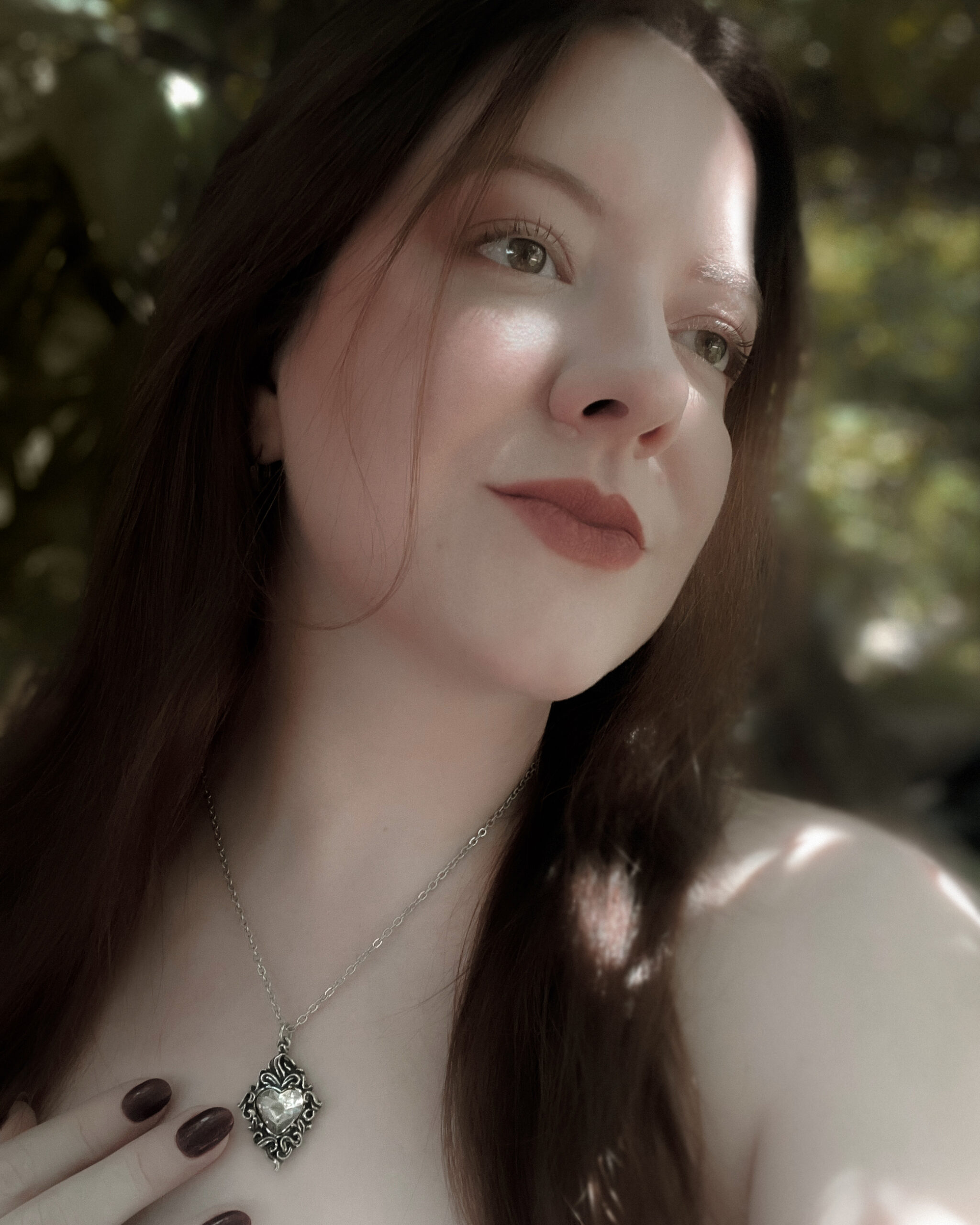
(b. 1991, Brazil) Lives and works in Brazil.
Carol Lozove’s artistic practice delves into the intersections between time, latent memory, and the opacity of physical matter, grounding itself in the principles of transcendental philosophy to probe the limits of perception and the thresholds of identity. Through a visual vocabulary driven by desaturation, diffuse contours, and the sobriety of a silent existence, wherein silence establishes an imperative pause within the flux of an imaginary and non-existent time to reclaim the inward-facing gaze, the artist projects pictorial surfaces that tension the conditions of the soul in the face of the dissolution of the ego.
Her method develops by means of a reverse archaeology, where alchemical rhythm and structural geometry serve as axes for the transmutation of matter. In response to the saturation of visual noise and the formal volatility that govern the contemporary landscape, Lozove’s production rises as an intentional manifesto for the reclamation of harmony and structural beauty. Within it, latent forces and tensions are distilled until the tactile thickness and density of matter give body to the metamorphosis: the exact moment when form converts into flower, emerging over the rigidity of the plane as a definitive symbol of healing and order. By renouncing immediate sharpness and the saturnine appeals of the present, her work consolidates itself as an archive focused on the manifestation of the abundant vacuum and the emancipation of form.
CAROL LOZOVE
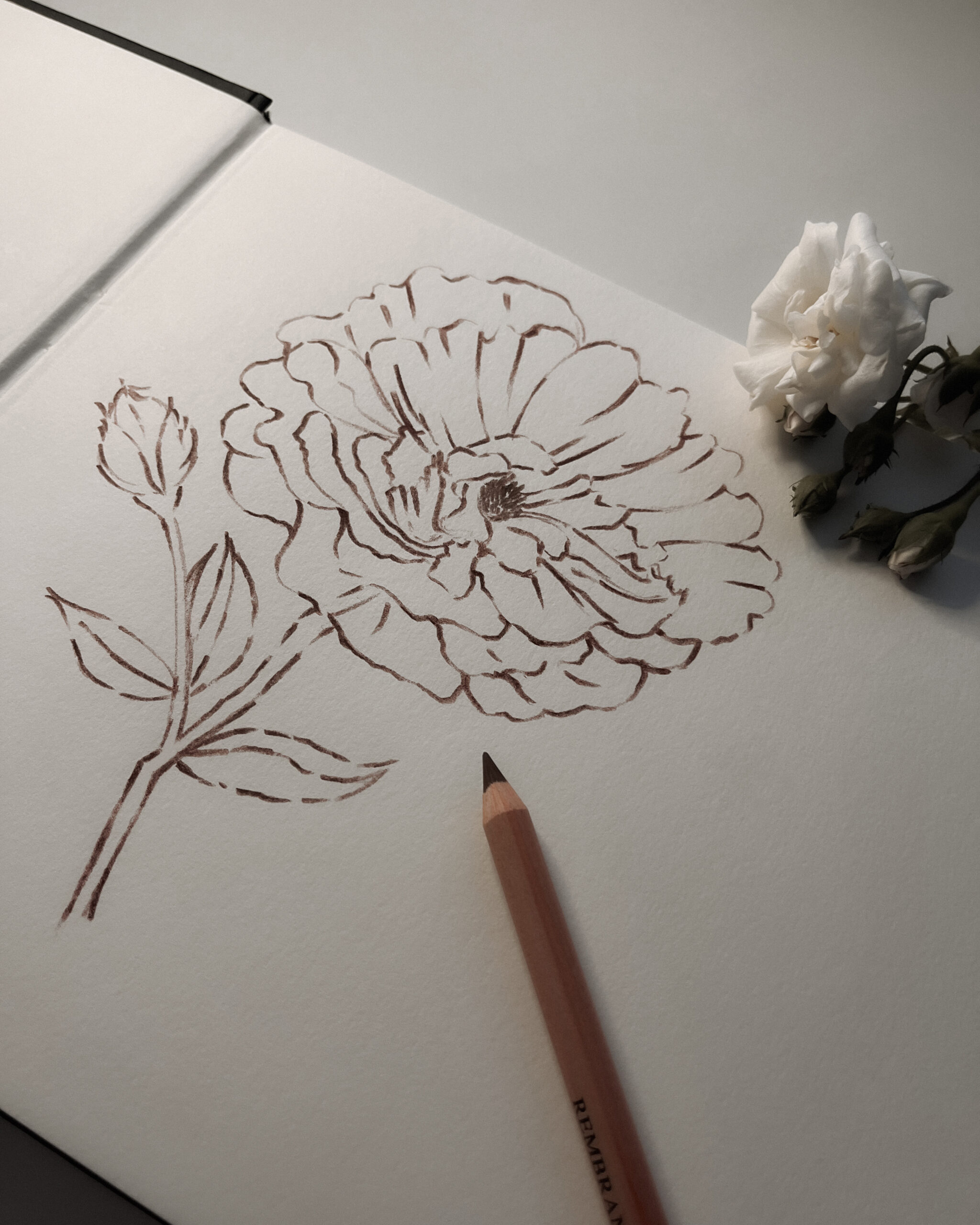
The entire visual universe of Lozove originates from an absolute contact with the prima materia. Before reaching the density of painting and the rigor of cotton paper, creation awakens within the silent space of the studio through the study of real flowers. It is there, in the elemental touch of graphite on paper while translating living botanical anatomy, that meticulous observation first converts into matter.
Far from being mere preliminary records, these manual processes operate as an intentional reclamation of the beautiful and the organic. Through a living and intense stroke, the natural form is distilled of its excesses and the noise of the outside world. Every line transforms the fragility of nature into a perennial and ordered structure, ensuring that the final artwork carries the same visual sovereignty present in its analog origin.
THE ALCHEMY
(b. 1991, Brazil) Lives and works in Brazil.
Carol Lozove’s artistic practice delves into the intersections between time, latent memory, and the opacity of physical matter, grounding itself in the principles of transcendental philosophy to probe the limits of perception and the thresholds of identity. Through a visual vocabulary driven by desaturation, diffuse contours, and the sobriety of a silent existence, wherein silence establishes an imperative pause within the flux of an imaginary and non-existent time to reclaim the inward-facing gaze, the artist projects pictorial surfaces that tension the conditions of the soul in the face of the dissolution of the ego.
Her method develops by means of a reverse archaeology, where alchemical rhythm and structural geometry serve as axes for the transmutation of matter. In response to the saturation of visual noise and the formal volatility that govern the contemporary landscape, Lozove’s production rises as an intentional manifesto for the reclamation of harmony and structural beauty. Within it, latent forces and tensions are distilled until the tactile thickness and density of matter give body to the metamorphosis: the exact moment when form converts into flower, emerging over the rigidity of the plane as a definitive symbol of healing and order. By renouncing immediate sharpness and the saturnine appeals of the present, her work consolidates itself as an archive focused on the manifestation of the abundant vacuum and the emancipation of form.
CAROL LOZOVE
The entire visual universe of Lozove originates from an absolute contact with the prima materia. Before reaching the density of painting and the rigor of cotton paper, creation awakens within the silent space of the studio through the study of real flowers. It is there, in the elemental touch of graphite on paper while translating living botanical anatomy, that meticulous observation first converts into matter.
Far from being mere preliminary records, these manual processes operate as an intentional reclamation of the beautiful and the organic. Through a living and intense stroke, the natural form is distilled of its excesses and the noise of the outside world. Every line transforms the fragility of nature into a perennial and ordered structure, ensuring that the final artwork carries the same visual sovereignty present in its analog origin.